Services
Ventilation Cleaning Service: What to Expect from a Professional Clean
A step-by-step guide to what happens during a professional ventilation cleaning service, from initial survey to final documentation.
Bright Hygiene • 3 min read
Before the Clean: Survey and Planning
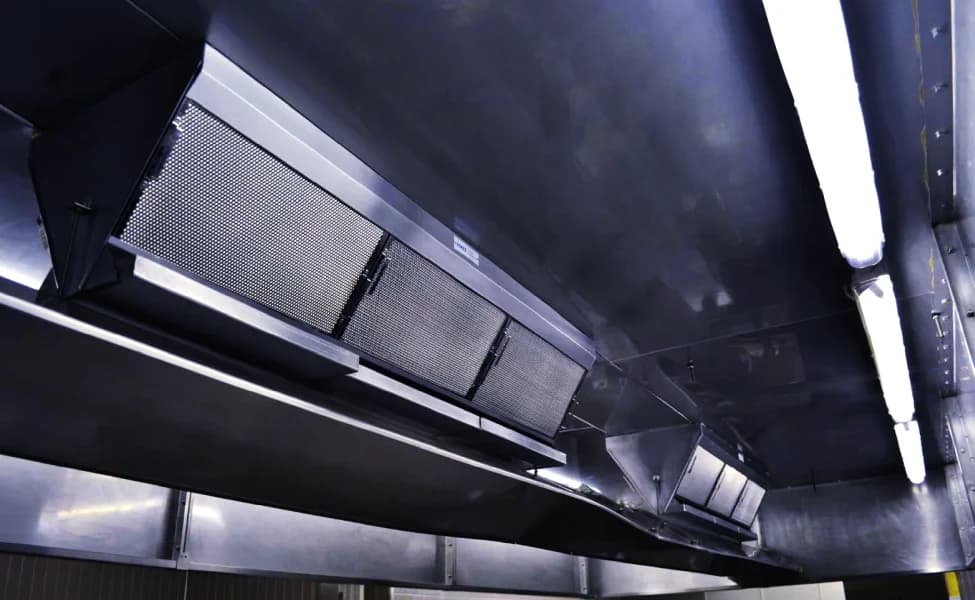
A professional ventilation cleaning service starts before anyone picks up a tool. A trained company representative will first carry out a survey of your system to assess its condition, identify the scope of work, and plan access. This includes checking the ductwork layout, locating all access panels, assessing the level of contamination, and identifying any areas that may require access equipment or additional works such as access panel installation.
The survey also establishes practical details: when the facility will be out of service, access procedures (including roof access for discharge points and external fans), and any site-specific health and safety requirements. A competent service provider will coordinate all of this in advance to minimise disruption to your operation.
Access Requirements and Preparation
Ventilation cleaning requires access to the full system from canopy to discharge and/or intake to vent. This means the system must be shut down and if works are to be done on the grease extract system, all cooking equipment is switched off and cooled. The area beneath the canopy is protected with sheeting to catch any debris or cleaning solution during the process.
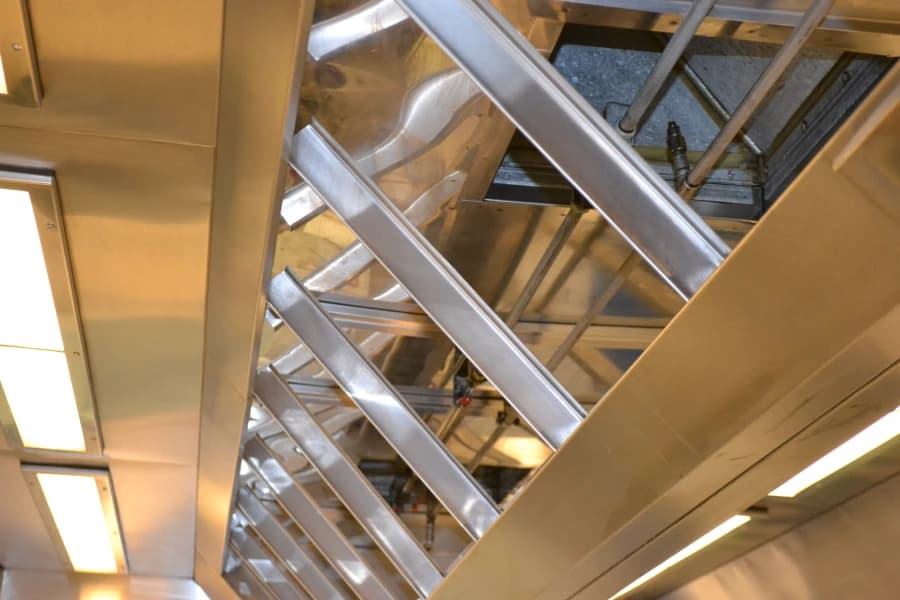
Access panels throughout the ductwork are opened, and if the system extends to a rooftop fan or discharge point, the cleaning team will need safe access to the roof. If your ductwork lacks adequate access panels, the contractor should highlight this beforehand and may need to install additional panels before the system can be fully cleaned.
The Cleaning Process
Professional ventilation cleaning uses a combination of manual scrubbing/scraping and professional-grade degreasing agents. The team works systematically through the system to the discharge point.
Each section of ductwork is cleaned through its access panel, with technicians working along the system to ensure complete coverage. Fan units are dismantled where possible to remove grease from blades, housings, and motor assemblies. The entire process can typically take between 4 and 10 hours depending on the size and condition of the system.
Post-Clean Verification and Testing
After cleaning, the contractor carries out post-clean verification to confirm that deposits have been reduced to acceptable levels. For grease extract systems, this is done using a Deposit Thickness Test (DTT) or Wet Film Thickness Test (WFTT), with a post-clean threshold of 50 microns.
Before-and-after photographs are taken at key points throughout the system to provide visual evidence of the work carried out. These images, along with the test results, form the basis of our post-clean report.
Documentation You Should Receive
A TR19 Grease-compliant ventilation cleaning service should provide you with a formal post-clean report including the date and scope of cleaning, photographic evidence showing the condition before and after, deposit thickness test results, details of any areas that could not be accessed or cleaned, observations on the system's condition and any remedial recommendations.
At Bright, we provide comprehensive documentation with every ventilation clean. This report serves as your evidence for insurance compliance, fire risk assessments, and EHO inspections — all in one document that you can file it appropriately and produce whenever it is needed.