Services
Commercial Oven Cleaning: What's Involved and How Often?
What professional commercial oven cleaning involves, how it differs from domestic cleaning, and how often your kitchen equipment needs it.
Bright Hygiene • 3 min read
Why Commercial Ovens Need Specialist Cleaning
Commercial ovens operate at far higher temperatures and for far longer hours than their domestic counterparts. A busy restaurant or hotel kitchen may be using its ovens to cook for 12 to 16 hours a day, seven days a week. At this intensity, carbon deposits, baked-on grease, and food residue accumulate rapidly on oven interiors and components.
This is a job beyond a standard oven cleaner spray and a cloth. Commercial oven cleaning requires professional-grade degreasing products, specialist tools, and an understanding of how to disassemble and reassemble the equipment safely without damaging components.
What the Cleaning Process Involves
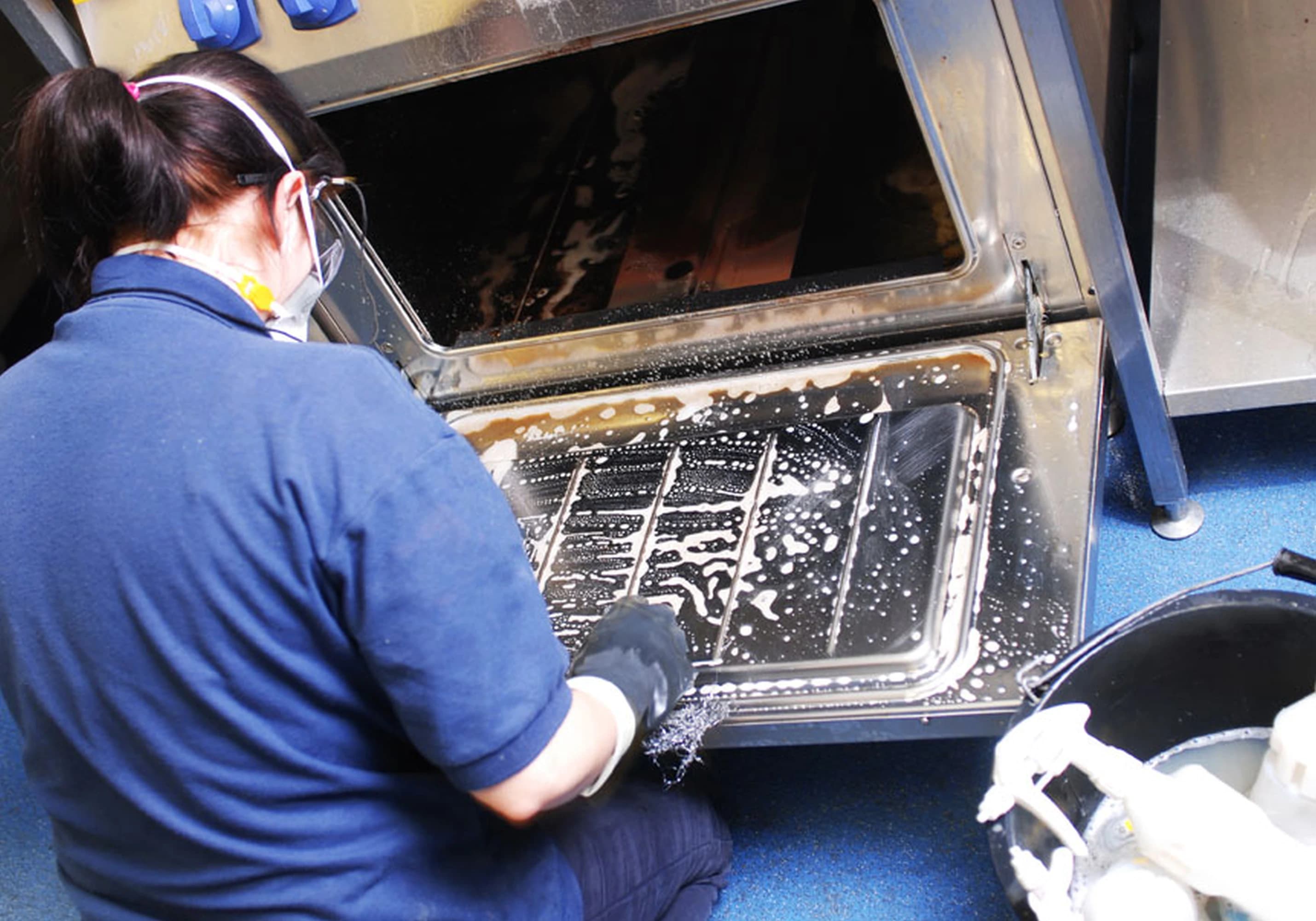
A professional commercial oven deep clean follows a systematic process. The oven is first switched off and allowed to cool. Removable components — racks, trays, shelving, fan covers, and door seals — are taken out for soaking in a high-alkaline chemical agent.
All internal surfaces are then sprayed and then left for our chemicals to break down baked-on carbon and grease. Technicians then manually remove stubborn deposits using non-abrasive tools. Once all residue is removed, surfaces are rinsed thoroughly and sanitised with food-safe products. Components are then reassembled, and the oven is checked for correct operation before being returned to service.
How Often Should Commercial Ovens Be Cleaned?
The frequency depends on usage. As a general guide, high-volume kitchens (restaurants, hotels, hospitals) should have ovens professionally cleaned on a monthly or quarterly basis. Moderate-use kitchens (schools, care homes, smaller restaurants) typically need a professional clean every 3 to 6 months. Light-use kitchens may only require a deep clean every 6 to 12 months.
Between professional cleans, daily wiping and weekly internal cleans by kitchen staff are fundamental to prevent excessive build-up. However, daily cleaning cannot reach the areas a professional deep clean covers — behind panels, inside fan housings, and around door seals where grease can accumulate out of sight.
What EHOs Expect
During their inspections, Environmental Health Officers will evaluate the cleanliness of all cooking equipment. Ovens with heavy carbon build-up, grease-coated fan assemblies, or damaged door seals will detract against your Food Hygiene Rating. The Food Standards Agency guidance is clear - that all food contact surfaces and equipment must be maintained in a clean and hygienic condition.
Beyond the inspection itself, poorly maintained ovens affect food quality, increase energy consumption as the oven works harder to reach temperature, and can present a fire hazard as grease deposits near heating elements can ignite.
The Benefits of Professional Cleaning
Regular professional oven cleaning extends equipment lifespan, improves energy efficiency, ensures consistent cooking results and keeps your kitchen inspection-ready at all times. It also mitigates the risk of equipment failure during service — a badly maintained oven is far more likely to break down in the middle of a service than a properly maintained one.
At Bright, commercial oven cleaning forms part of our kitchen deep cleaning service. We clean all cooking equipment to a standard that satisfies EHO requirements and keeps your kitchen operating efficiently. Contact us to discuss a cleaning schedule that suits your operation.